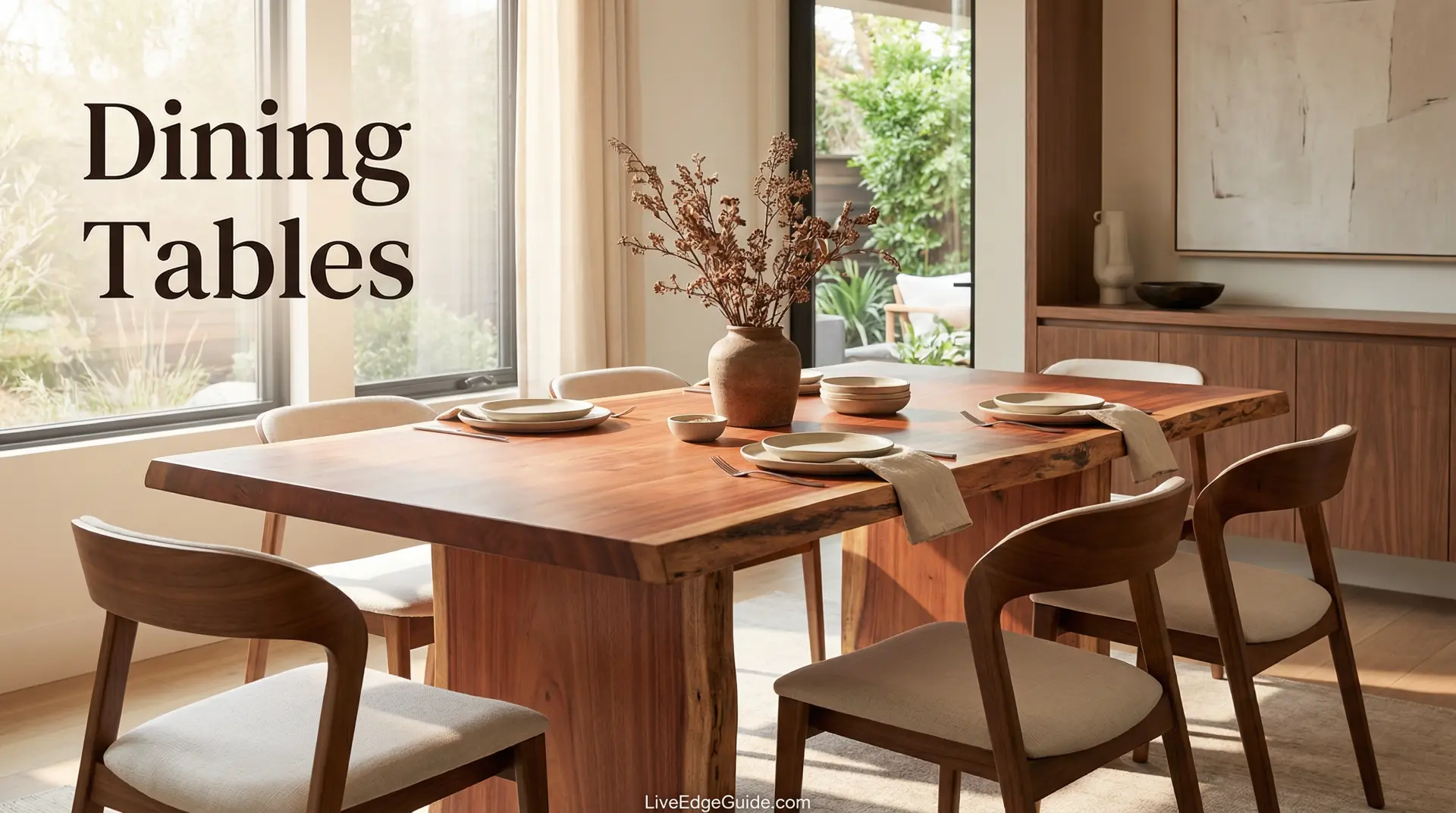
Is Parota Wood Good for Dining Tables?
One of the most common questions we get is: "I love the look of that massive slab, but is it going to last?"
The short answer is yes. Parota (also known as Guanacaste) is arguably the best wood species available today for large-format live edge dining tables. Here is why.
1. Size Matters for Dining
Most domestic hardwoods (like Walnut or Oak) rarely grow large enough to create a 40-50 inch wide single slab. To make a table that wide, you usually have to glue two or three boards together (a "bookmatch" or "glue-up").
Parota plays by different rules. The trees are massive.
- Single Slabs: It is common to find single Parota slabs that are 4, 5, or even 6 feet wide.
- The Look: This means your dining table is one seamless, continuous canvas of nature. No glue lines. No color matching issues. Just one giant tree trunk.
2. Stability in Temperamental Climates
Wood moves. It expands in summer humidity and contracts in winter dryness. Parota has an "interlocking grain" structure that makes it incredibly stable once kiln-dried. It is less likely to split or check (crack) than denser woods like White Oak when subjected to HVAC fluctuations.

3. The "Warmth" Factor
Dining rooms are gathering spaces. You want warmth. Parota has a reddish-amber heartwood that glows under warm dining room lighting. The creamy sapwood on the live edges frames the table, making it pop against dark floors or rugs.
The One Drawback (And How to Fix It)
Parota is lighter and slightly softer than Black Walnut.
- Risk: If your kid drags a metal toy car across it with full force, it will dent.
- Fix: This is entirely dependent on the finish. A raw Parota table is vulnerable. A Parota table finished with a high-grade ceramic-fortified finish or deeper penetrating hardwax oil becomes a daily driver capable of handling family life.
See the difference.
View our gallery of Parota dining tables that have been in family homes for years.
View Dining GalleryFrequently Asked Questions
Does Parota wood scratch easily?
Parota is softer than red oak, so it can dent or scratch if not finished properly. We recommend a high-quality ceramic nano-coating or hardwax oil to increase surface durability.
Is Parota water resistant?
Yes, Parota is naturally water-resistant due to its tropical origins, making it less prone to localized swelling from spills compared to domestic softwoods.