Mesquite: Why It's the Most Stable Wood in North America
Mesquite: Why It's the Most Stable Wood in North America
For many Texans, Mesquite is just something used for BBQ. But for those in the high-end furniture world, it is the holy grail of stability.
The King of Stability
Most wood expands and contracts significantly as the Texas humidity swings. Mesquite is different. Its cellular structure is so stable that it moves only a fraction of what Oak or Walnut does.
- Benefit: This means Mesquite is less likely to split, crack, or warp over the decades, even in challenging environments.
The Aesthetic: Rustic & Rich
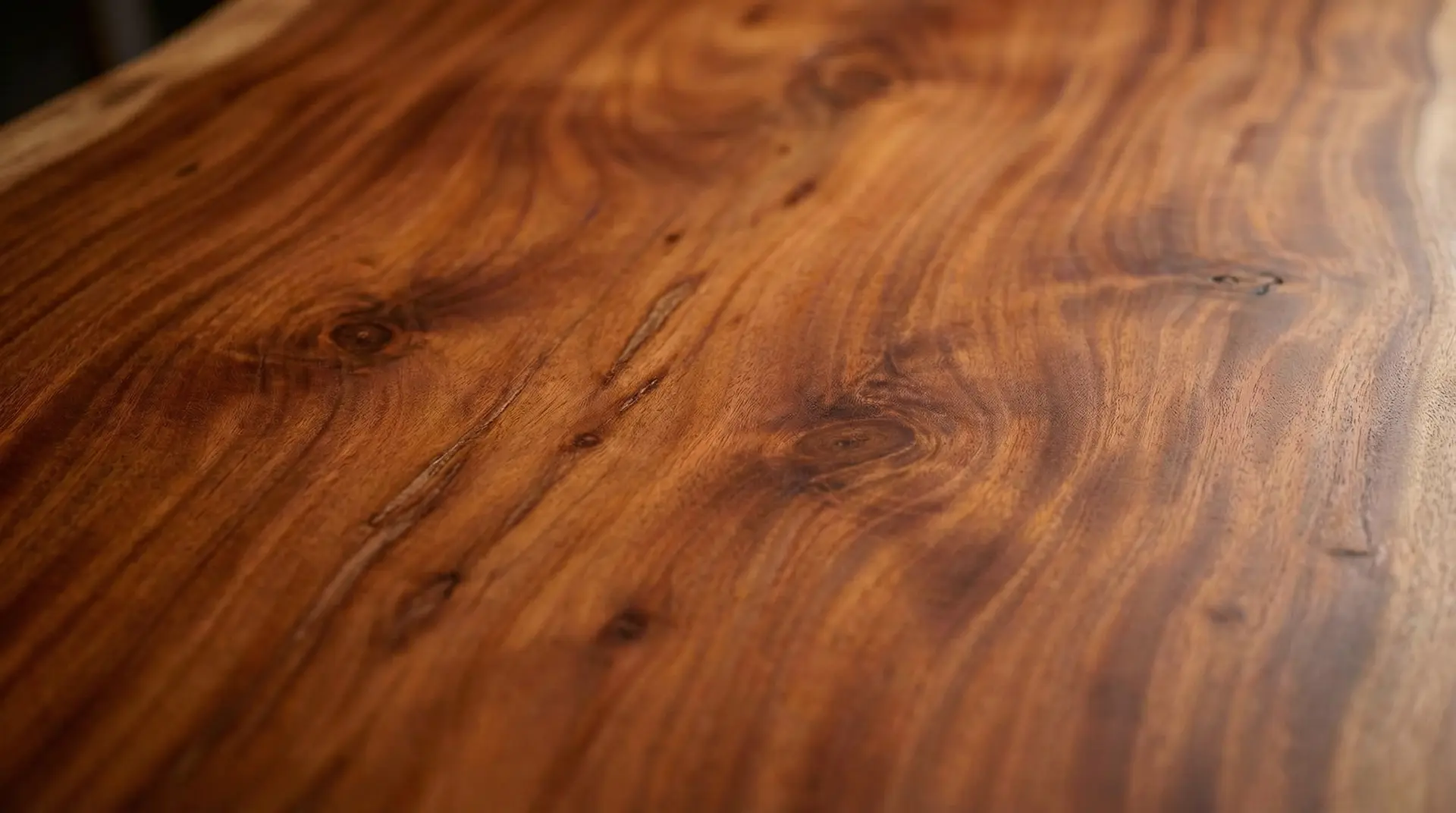
Mesquite is not a "clean" wood. It is defined by its character:
- Ingrown Bark: Slabs often have pockets of bark inside the wood.
- Cracks & Voids: Small cracks are part of the Mesquite charm. We typically stabilize these with black epoxy to keep the look natural while making the surface perfectly smooth.
- Deep Red Hues: Over time, Mesquite darkens into a rich, deep reddish-brown that looks incredible under a hand-rubbed oil finish.

Sizing: The Coffee Table Hero
Because Mesquite trees are relatively small, you almost never see a single-slab Mesquite dining table.
- Coffee Tables: Mesquite is the absolute best choice for coffee tables and end tables.
- River Tables: If you want a Mesquite dining table, it is almost always made in a "River" style, where multiple smaller boards are joined by epoxy to reach a 40-inch width.
Sourcing Texas Mesquite
High-quality Mesquite usually comes from South Texas or the Hill Country. It is a slow-growing tree, which is what makes the wood so dense and durable.
Texas Legend
View our collection of Mesquite coffee table slabs and custom dining commissions.
Explore MesquiteFrequently Asked Questions
Why are Mesquite tables so small?
Mesquite trees are scrubby and rarely grow wide or tall. Finding a Mesquite slab over 30 inches wide is extremely rare and very expensive.
Does Mesquite move with humidity?
Hardly at all. Mesquite has a nearly 1:1 tangential-to-radial shrinkage ratio, making it the most stable wood in North America.