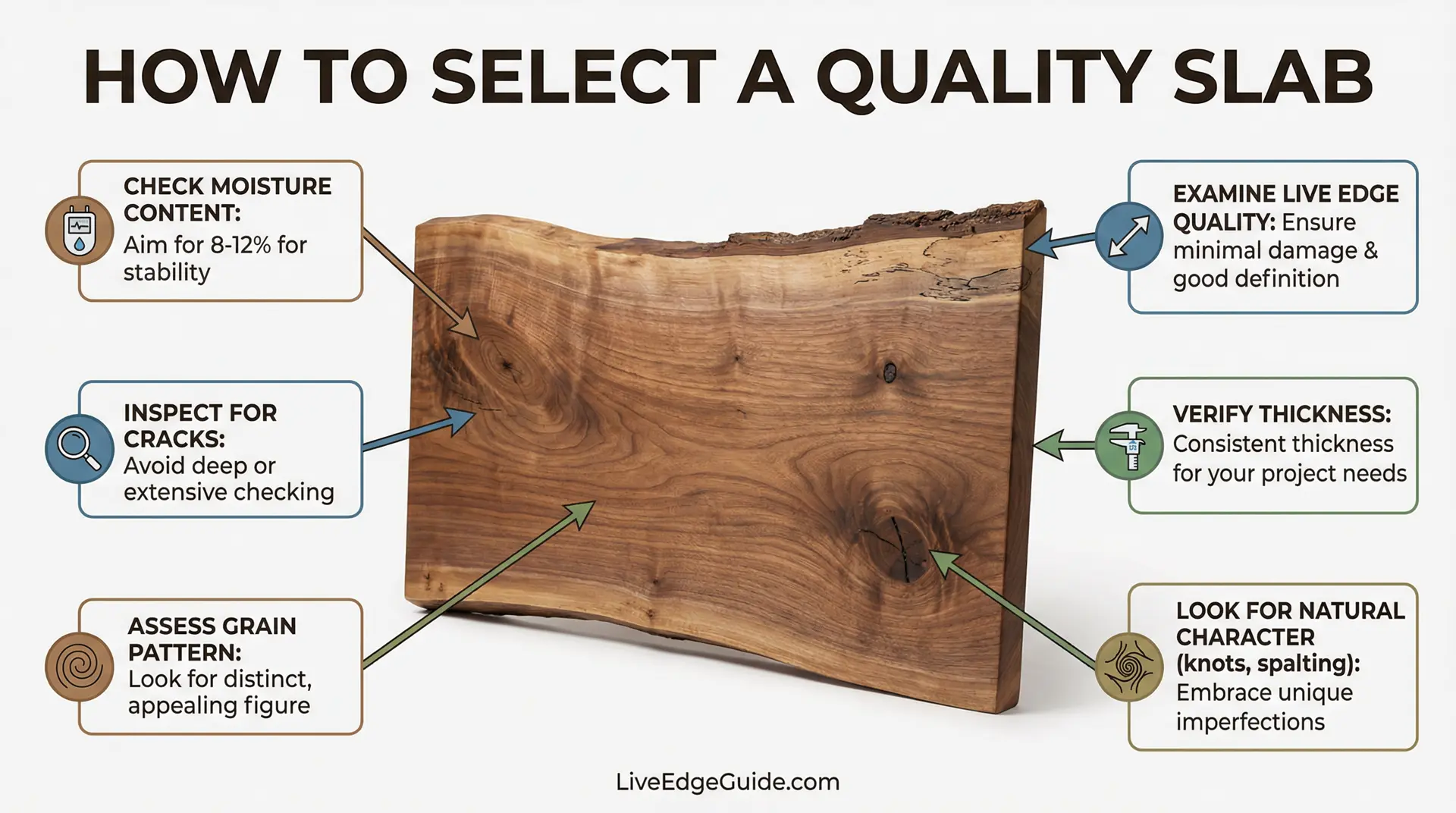
How to Choose the Right Live Edge Table for Your Space
How to Choose the Right Live Edge Table for Your Space
Buying a live edge table is not like buying a box from IKEA. You are buying a slice of a tree, and trees don't follow standard manufacturing rules. A custom table is a functional sculpture that must harmonize with its surroundings. This masterclass will help you navigate the variables—from aesthetics and ergonomics to engineering—to find "The One."
Conceptual Design: Matching Your Style
One of the greatest myths about live edge furniture is that it only belongs in "rustic" or "cabin" settings. In reality, the organic lines of a slab provide a perfect counterpoint to many modern aesthetics.
1. Organic Modern
This style is all about clean lines, neutral palettes, and natural materials.
- The Slab: Look for a moderate live edge with a consistent grain pattern.
- The Finish: Clear, matte finishes (like Rubio Monocoat Pure) that allow the wood's true color to shine.
- The Base: Minimalist steel legs in matte black or white.
2. Japandi (Japanese + Scandinavian)
Japandi focuses on simplicity, functionality, and the beauty of nature.
- The Slab: Select slabs with "Wabi-Sabi" characteristics—natural cracks stabilized by delicate butterfly joints. Darker woods like Walnut or Parota offer a grounding effect against airy Scandinavian decor.
- The Base: Low-profile, thick wood pedestals or subtle mitered "Waterfall" legs.
3. Industrial Luxury
For warehouse lofts or modern urban homes.
- The Slab: "Wild" slabs with deep burls, large voids, and high-contrast sapwood.
- The Base: Heavy-duty, raw-steel I-beam legs or aged brass trapezoids.
- Epoxy: Black or charcoal-tinted epoxy inlays work beautifully here to mimic the look of industrial materials.
4. Coastal / Mediterranean
- The Slab: Lighter-toned species like White Oak or Maple. If using Parota, choose pieces with a larger percentage of creamy yellow sapwood to mimic sun-bleached driftwood.
- The Base: White-coated metal or light-finished wood.
Further Reading: Finding Your Perfect Slab Profile & Space Planning
Ergonomics and Space Planning: The Math of Comfort
A stunning table that you can't sit in comfortably is a failure of design. Because live edge slabs are irregular, standard furniture math must be adjusted.
1. Seating Clearances
- The 36/42 Rule: You need a minimum of 36" of clearance behind every chair to allow people to stand up. If the table is in a high-traffic lane (like between the kitchen and living room), aim for 42" to 48".
- Elbow Room: Standard seating requires 24" of width per person. However, for live edge slabs with wild contours, we recommend 30" per person. This allows guests to sit "around" a curve or knot without bumping elbows.
- Leg Clearance: Avoid chunky trestle bases for slabs shorter than 7 feet. You need 12" to 14" of "knee room" from the edge of the table to the leg.
2. Height Engineering
- Standard Dining Height: 29" to 30" (inclusive of the slab thickness).
- The Slab Variable: If you choose a massive 3" thick slab, your base must be 27" tall. If the slab is a standard 2" thickness, the base should be 28". Always measure your chairs' arm height to ensure they can tuck under the finished table.
Budgeting Tip: See our 2025 Live Edge Pricing Guide
Base Engineering: Supporting the Weight and Tension
A live edge slab is a dynamic powerhouse of internal tension. Your base doesn't just hold the table up; it keeps it flat.
1. Managing Structural Tension
Wood cells are like bundles of straws. As humidity changes, those straws expand and contract. This creates a force that can literally bend steel if not managed correctly.
- Mounting Plates: Use thick (1/4" or 3/8") steel mounting plates that span as much of the slab's width as possible.
- Slotted Mounting: Your base must be attached using slotted holes. This allows the wood to move left-to-right (across the grain) while the steel keeps the top flat.
2. Floor Loading and Leveling
A 10-foot Parota or Walnut table can weigh 400+ lbs.
- Leveling Feet: Every premium base should have adjustable "leveling feet" or glides. Because no floor is perfectly flat, even a 1/16" wobble in a massive table can create distracting vibrations.
- Weight Distribution: For extremely heavy slabs (4" thick), consider "H-frame" or "X-frame" bases that distribute the weight across a wider footprint to protect your flooring.
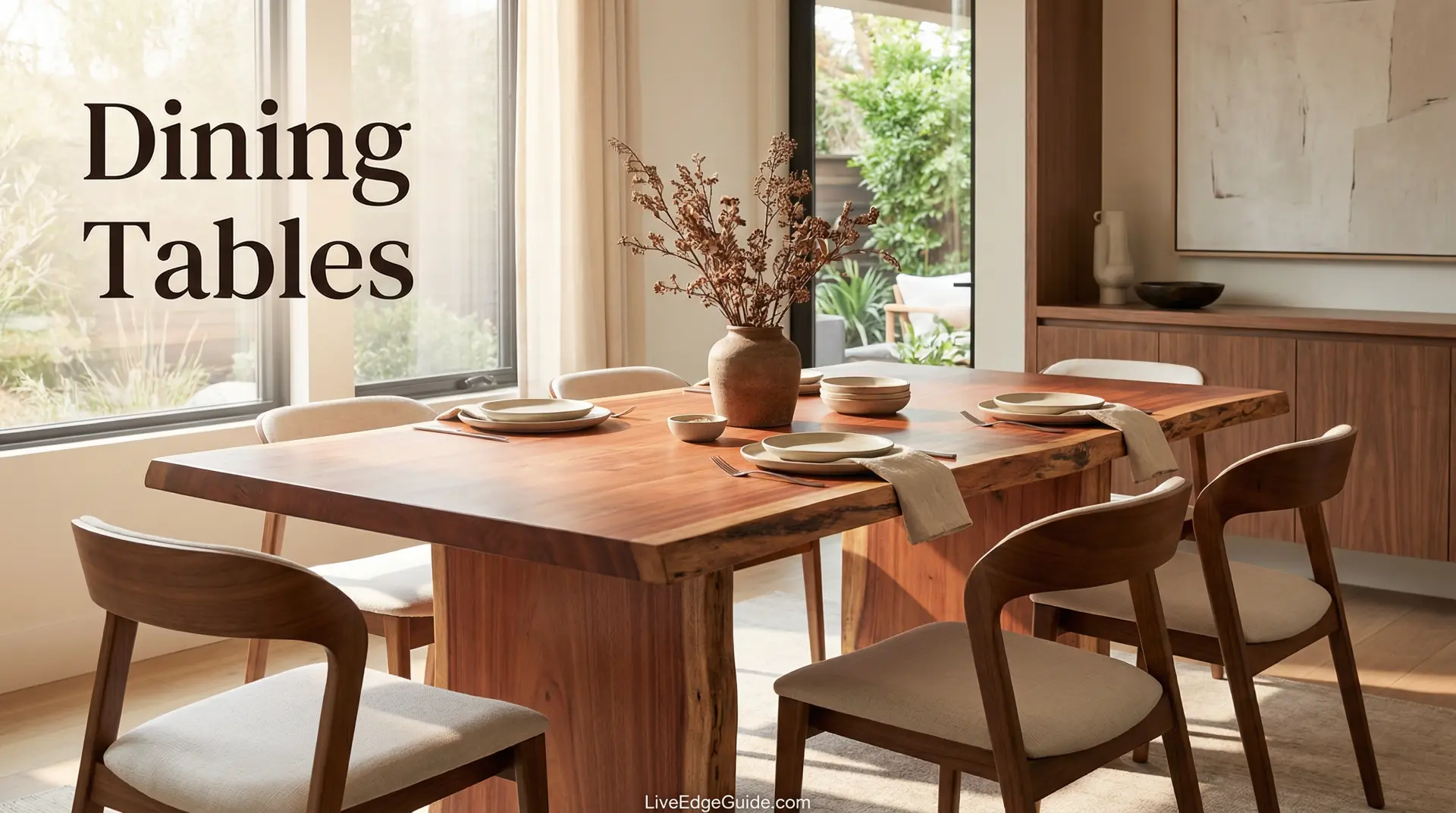
Seating Pairings: Balancing Wood and Texture
Your choice of chairs can either elevate your live edge table to a gallery piece or make the room feel cluttered. As a rule, the more "active" the grain of the slab, the more "quiet" your chairs should be.
1. Wood on Wood (The Nakashima Look)
If you want a traditional, organic look, pair your table with wood chairs.
- The Secret: Don't try to match the wood species perfectly. If you have a Parota table, try black-stained Oak or Walnut chairs. Matching the species often creates a "washed out" look where the table loses its status as the centerpiece.
- Spindle Backs: Windsor or spindle-back chairs (like the classic Nakashima style) provide "visual transparency," allowing you to see through the chairs to the live edge of the table.
2. Metal and Industrial Contrast
- Modern Edge: Matte black steel chairs pair beautifully with industrial bases.
- Mixed Materials: Leather or velvet upholstery on a metal frame provide the soft texture needed to balance the hard, organic surface of the wood.
Epoxy Color Science: Choosing the Right Tint
If your slab has cracks or voids that require resin, the color of that resin is a critical design decision.
1. The "Invisible" Fill
- Transparent Black/Smoke: This is our most recommended option. It allows you to see the "wall" of the crack inside the wood but remains dark enough to look sophisticated. It behaves like a deep shadow rather than a plastic fill.
- Clear Resin: Use this ONLY for small stability cracks. Larger clear fills can act like a magnifying glass, showing the underside of the table or the rug, which can be distracting.
2. The "Statement" Fill
- Opaque Black: Creates a high-contrast, graphic look. Ideal for "Industrial Luxury" styles.
- Metallic Tints: Copper or Bronze powders can be used to bridge the gap between a warm wood (like Pecan) and a metal base. Use sparingly to avoid a "kitchness" that dates the piece.
Architectural Anchoring: Rugs and Placement
A 400lb table needs an anchor.
1. Rug Sizing
- The Rule of 30: Your rug should extend at least 30 inches beyond the table on all sides. This ensures that when a guest pulls their chair out to sit, the legs remain on the rug.
- Texture Pairing: Choose low-pile rugs (like Jute or Sisal) to provide a neutral, earthy foundation that doesn't compete with the wild grain of the table.
2. The "Hero" Angle
When placing the table in the room, consider the "Grain Flow."
- Sight Lines: Position the table so that when you enter the room, you see the "Live Edge" profile first, rather than looking straight down the end-grain. This emphasizes the organic silhouette of the tree.
- Lighting Anchor: If the table is the hero of the room, the light fixture should be centered perfectly over the center of the slab, regardless of where the junction box is in the ceiling (use a "swag" or architectural bar if necessary).
Single Slab vs. Bookmatch
- Single Slab: One solid slice of a giant tree. (Parota is famous for this). Rare and premium.
- Bookmatch: Two consecutive slices opened like a book and glued. Creates a mirrored grain pattern. Good for getting width from smaller trees (like Walnut).
- Multi-Board: 3+ boards glued together. More economical, but looks closer to a standard wood table.
The Character
- Quiet: Straight grain, few knots. Modern and clean.
- Loud: Burls, wild grain, voids. Rustic and artistic.
3. The Edge Profile
- Natural Live Edge: The bark is removed, but the curvy, organic shape of the tree remains.
- Inverted Edge: Cut at an angle (chamfered) to look sleeker.
- Straight Edge: The live edge is cut off for a rectangle. (We don't recommend this – you pay for the live edge character, why cut it off?)
4. Leg Systems (The Base)
The base changes the vibe entirely.
- Steel U-Legs / Trapezoids: Industrial, modern, sturdy.
- Spider / Asterisk Bases: Sculptural, allows more legroom at corners.
- Wood Pedestals: Traditional, warm.
[!TIP] Ensure your base is rated for the weight. A 9ft Parota slab can weigh 300+ lbs.
5. The Finish
Do you have kids? Red wine drinkers?
- Matte Oil: Easiest to repair scratches yourself.
- Satin Poly: Better "armor" against careless spills, but harder to fix if scratched.
Need help sizing?
Download our free Table Size Calculator or chat with our design team.
Contact Design TeamEnvironmental Planning: Protecting Your Investment
A live edge table is a living, breathing object. To ensure it remains as stable as the day it was delivered, you must consider the environment of your room.
1. Humidity and HVAC Placement
Wood movement is driven by the exchange of moisture between the wood cells and the air.
- The Golden Range: Aim to keep your home’s relative humidity between 35% and 55%.
- HVAC Vents: Never place a live edge table directly under or over an HVAC vent. The focused stream of hot or cold dry air will cause one side of the slab to shrink faster than the other, leading to "cupping" or surfacing cracks.
2. Sunlight and UV Exposure
UV rays act as a catalyst for chemical changes in wood tannins.
- Color Shift: Species like Cherry will darken significantly with sun exposure, while Walnut tends to lighten over time.
- Placement: If your table is near a large south-facing window, consider high-quality UV-rated window films or rotating the table 180 degrees once a year to ensure even "tanning" of the wood.
The Physics of Lighting: Showcasing the Grain
You haven't truly seen your live edge slab until it is properly lit. The goal is to highlight the "Chatoyancy"—the holographic quality of the wood fibers.
1. Kelvin and Color Temp
- 3000K (Warm White): Ideal for Walnut and Parota. It enhances the amber and gold tones of the grain.
- 4000K (Cool White): Better for White Oak or Grey-toned slabs, bringing out the neutral and modern characteristics.
2. Beam Angles and Positioning
- Linear Pendants: For 8ft+ tables, use a linear pendant light that spans at least 60% of the table's length. This prevents "hot spots" and ensures the grain is evenly illuminated from end to end.
- Grazing Light: Positioning lights at a slight angle rather than directly overhead will cast subtle shadows in the "live" part of the edge, emphasizing its 3D organic texture.
Conclusion: A Masterpiece in Your Home
Choosing a live edge table is a journey of education and emotion. By considering the style, ergonomics, engineering, and environment, you aren't just buying furniture; you are curating an heirloom.
Final Design Checklist:
- Style Match: Does the slab profile and base fit your room’s aesthetic (Japandi, Modern, etc.)?
- Ergonomics: Do you have 36" of clearance and enough knee room?
- Engineering: Is the base attached with slotted holes and rated for 300+ lbs?
- Environment: Is the table clear of HVAC vents and direct UV?
- Audit: Have you asked your maker our 7 Critical Questions?
Ready to Build?
- Step 1: Use our Table Sizing Calculator to find your ideal dimensions.
- Step 2: Consult the Shopify Design Tool to visualize your slab with custom bases.
Bring Home the Masterpiece.
Our design team is ready to help you navigate every one of these steps to create your perfect custom table.
Schedule a Design ConsultFrequently Asked Questions
How wide should a dining table be?
For comfortable dining, look for a width of 36-42 inches. Slabs wider than 48 inches can feel too distant across the table, though they are great for conference rooms.
How much overhang should a table have?
You typically want 12-18 inches of overhang at the ends of the table to allow for comfortable seating without hitting the table legs.