The Botany of a Giant: Understanding the Guanacaste Tree
To appreciate Parota wood, one must understand the tree from which it comes. Enterolobium cyclocarpum, commonly known as the Guanacaste tree, is one of the most iconic and biologically significant species in the tropical dry forests of Mexico and Central America.
1. The "Elephant Ear" Pods
The name "Guanacaste" comes from the Nahuatl word cuauhnacaztli, meaning "ear-tree." This refers to the tree’s seed pods—thick, dark-brown, circular pods that resemble a human or elephant ear. These pods are not just for show; they are a vital food source for livestock and local wildlife.
2. Rapid Growth and Carbon Capture
One of the most remarkable features of the Parota tree is its growth rate. In ideal tropical conditions, a Guanacaste tree can reach a diameter of nearly 10 feet in just 40 to 60 years.
- Comparison: A North American Black Walnut tree would require 150+ years to reach even half that girth.
- Sustainability: This biological efficiency makes Parota a "renewable giant." It captures carbon at a much faster rate than slow-growing hardwoods, making it a favorite for eco-conscious designers. Learn more about our sourcing ethics.
3. Roots and Resilience
The tree’s massive canopy (which can spread over 100 feet wide) is supported by a shallow but expansive root system. This allows the tree to survive in regions with intense seasonal rain and wind. However, these massive roots often require the tree to be planted far from urban infrastructure, making salvaged "rural" logs a common source for high-end slabs.
Technical Characteristics: The Woodworker’s Perspective
Working with Parota requires a specific set of skills and an understanding of its unique cellular structure.
1. Interlocking Grain (The Ribbon Effect)
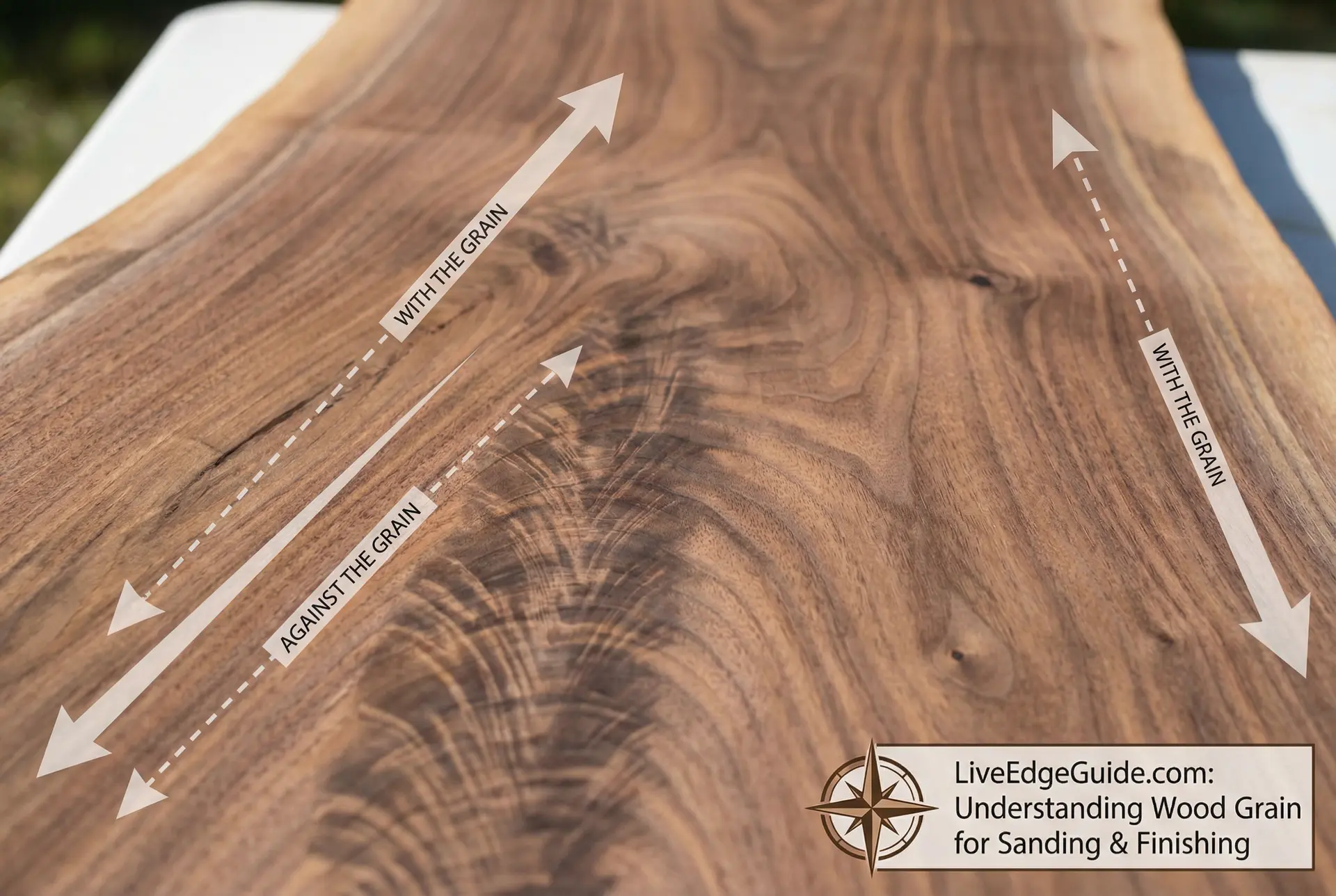
Parota features an interlocking grain, which occurs when the tree's fibers spiral in different directions during growth.
- The Look: This creates a "ribbon" or striped effect when surfaced, adding visual movement and depth to the slab.
- The Strength: Interlocking grain makes the wood naturally resistant to splitting and "checking" (cracking) compared to domestic species with straight grain.
2. Silica Content and Tool Wear
Parota contains high levels of silica (sand-like mineral deposits).
- Abrasive Nature: These minerals are tough on standard woodworking tools. To achieve a premium finish at Kovara, we use high-grade carbide or diamond-tipped cutters to ensure the wood fibers are sliced cleanly rather than being crushed.
- Dust Control: Because of the silica and natural resins, Parota sawdust is a known irritant. Professional fabrication requires highly advanced industrial dust extraction systems to protect the craftsmen.
3. Stability and Drying Behavior
Despite being a tropical wood, Parota is remarkably stable once it reaches equilibrium moisture content.
- Cell Structure: The cells in Parota are larger and more "spongy" than Walnut. This means it releases free water quickly during the initial air-drying phase.
- Tension: It holds significantly less internal tension than White Oak or Maple, meaning large slabs are less likely to warp after they have been surfaced and finished.

The Parota Profile: A Quick Reference
| Property | Value / Characteristic | Impact on Your Table | | :--- | :--- | :--- | | Common Name | Parota, Guanacaste, Rain Tree | Exotic, high-end branding. | | Sustainability | Fast-growing, non-endangered | Eco-conscious luxury. | | Workability | Interlocking grain, high silica | Requires professional fabrication. | | Color | Amber heartwood, Creamy sapwood | Striking, two-tone aesthetic. | | Density | Moderate (similar to Walnut) | Manageable weight for large pieces. |
Pros of Parota Wood
1. Massive Single Slabs
The Parota tree grows out as much as up. Trunks can easily reach 8 to 10 feet in diameter. This makes Parota the number one choice for wide dining tables (40"-60") and conference tables without needing to glue boards together.
2. Sustainability vs. Walnut
Black Walnut is slow-growing and increasingly scarce in large widths. Parota grows quickly in tropical environments, making it a more environmentally responsible choice for large wood projects.
3. Natural Water Resistance
Native to humid climates, Parota has natural oils that make it resistant to moisture and fungal decay. While we still recommend coasters, it is more forgiving than many domestic species.
4. Lightweight Strength
Despite its size, Parota is surprisingly light compared to Oak or Maple. This makes moving a 10-foot table manageable rather than impossible.
Cons of Parota Wood
1. Softer Density
Parota is not as rock-hard as White Oak. It can dent if heavy objects are dropped on it.
- Solution: We use high-performance finishes (like ceramic nano-coatings or hardwax oils) to harden the surface and protect against daily wear.
2. Sawdust Irritation (For Makers)
For the woodworker, Parota dust can be irritating. (Luckily, this only affects us in the shop, not you in your home!)
3. Wild Grain
If you want a perfectly straight, uniform look, Parota is not for you. Its beauty lies in its "imperfections"—swirling grain, knots, and organic edges.
Best Use Cases
Dining Tables
The classic use case. A 9-foot single-slab Parota table is a showstopper that defines a room. Is Parota actually right for your family's daily use?
Conference Tables
Because we can source slabs up to 15 feet long and 5 feet wide, Parota is one of the few woods suitable for single-piece boardroom tables.
Consoles and Coffee Tables
Using "cookies" (cross-cut rounds) of Parota creates stunning round coffee tables that show the tree's growth rings.
See Parota in Action
Browse our gallery of finished custom Parota tables delivered to clients in Texas.
View Finished TablesThe Great Debate: Parota vs. Black Walnut
For many high-end furniture buyers, the choice often comes down to these two heavyweight contenders. While they share some aesthetic ground, they serve very different functional needs.
1. Size and Width
- Parota: The clear winner for scale. Because the trees are massive, we can offer single slabs up to 60" wide.
- Walnut: Large widths are rare. Most wide Walnut tables are "glue-ups" of several smaller boards (mismatched grain) or very expensive book-matched pairs.
2. Weight
- Parota: Significantly lighter density (approx. 25-30 lbs/ft³). This is a benefit for large conference tables or residential pieces that may need to be moved.
- Walnut: Much denser and heavier (approx. 38-40 lbs/ft³). A large Walnut table often requires structural floor reinforcement.
3. Sustainability and Cost
- Parota: Fast-growing and abundant. Generally more affordable for large slabs (30-40% less than Walnut of the same size).
- Walnut: Slow-growing and high demand. Prices for wide, high-figured Walnut slabs are at an all-time high.
Commercial Applications: Slabs on a Grand Scale
Parota isn't just for dining rooms. Its unique properties make it the preferred choice for commercial and hospitality projects.
1. Boardroom and Conference Tables
Because we can source slabs up to 15+ feet in length, Parota allows for "monolithic" conference tables where 12-14 people can sit around a single, unbroken piece of wood. For large format examples, see Verified Slab J23386GNC (261 inches).
2. Hotel Lobbies and Bars
Parota’s natural resistance to decay and relatively lightweight nature make it ideal for massive "communal" bar tops or lobby centerpiece furniture. When paired with a professional-grade finish, it handles the rigors of commercial use with ease.
Regional Variations: Sourcing the Finest Logs
Not all Parota is identical. The geography of the tree significantly influences the density and color of the wood.
1. Mexican Parota
Often slightly denser with darker, more pronounced "streaking" in the heartwood. Logs from the coastal regions of Mexico are highly prized for their moisture resistance.
2. Central American (Costa Rican) Parota
Known for its massive diameter and exceptional sustainability management. Costa Rican Parota tends to have a lighter, more golden-amber hue and a very broad, creamy sapwood edge.
3. South American Sourcing
Slightly softer and more lightweight. While excellent for large slabs, it requires more intensive stabilization with resins to ensure structural integrity across the massive spans required for dining tables.
The Chemistry of Assembly: Gluing and Bonding Tropical Wood
Because Parota contains natural oils and resins (which contribute to its decay resistance), it can be challenging to glue using standard PVA wood glues.
1. Surface Preparation
Before gluing a Parota "Cookie" or bookmatching two slabs, the jointed edges must be wiped with Acetone. This momentarily pulls the surface oils away, allowing the glue to penetrate the wood fibers directly.
2. Specialized Adhesives
At Kovara, we recommend high-solids epoxies or specialized polyurethane glues (like Gorilla Glue or Titebond Poly) for Parota. These adhesives cure through a chemical reaction rather than just evaporation, providing a bond that is actually stronger than the surrounding wood fibers.
3. Clamping Physics
Because Parota is moderately soft, overtightening metal clamps can crush the live edge or the sapwood. We use "sacrificial" blocks of wood between our clamps and the slab to distribute the thousands of pounds of pressure evenly across the grain.
Working with "Cookies": The Cross-Cut Trend
In addition to traditional longitudinal slabs, Parota "Cookies" (horizontal rounds cut across the trunk) are highly sought after for coffee tables and accent pieces.
1. The Pith Challenge
The center of any tree (the pith) is the most unstable part. In a cross-cut round, the pith is under immense internal tension and will almost always crack as it dries.
- The Master Fix: Instead of fighting the crack, we embrace it. We stabilize the "radial check" using custom Butterfly Inlays (Bowties) made from a contrasting wood like Texas Pecan. This transforms a structural flaw into a beautiful design feature.
2. Leveling Large Rounds
Because cookies have end-grain on both sides, they are notoriously difficult to flatten using traditional planers. We use a Router Sled with a fresh 2" surfacing bit. Explore our Verified Parota Round Coffee Table to see a finished technical result.
The Art of Selection: Customizing Your Grain Flow
When you commission a custom Parota table, you aren't just choosing a species; you are choosing a specific biological pattern. At Kovara, we help clients understand the "Visual Weights" of different slabs.
1. The "Wild" Slab
If your room is minimalist or architecturally stark, a "Wild" Parota slab with heavy crotch-grain (where the trunk splits into two large branches) creates a swirling, chaotic landscape that becomes the focal point of the entire home.
2. The "Quiet" Slab
For more traditional or Zen-inspired spaces, we look for slabs from the "Bole" (the main trunk) of the tree. These offer long, straight "Ribbon Grain" that feels sophisticated and calm, with the live edge providing just enough organic movement to satisfy the eye.
Longevity and Patina: How Parota Ages
Wood is a light-sensitive material. Over the course of 20 to 50 years, your Parota table will undergo a natural transformation.
1. The "Honeying" Effect
Freshly surfaced Parota often has deep, coffee-colored heartwood. Over time, as it is exposed to ambient UV light, the heartwood will mellow into a warm, golden-amber "honey" tone. This patina is highly prized in heirloom furniture as it signals the age and history of the piece.
2. Sapwood Preservation
The creamy yellow sapwood edge of Parota is its most distinctive feature. However, sapwood is naturally less dense than heartwood. To ensure it doesn't "break down" over decades of use, we stabilize the entire edge with a deep-penetrating hardwax oil. This seals the soft fibers, preventing staining and ensuring the contrast between the dark interior and light exterior remains crisp for generations. See our Daily Care Guide for Parota.
Conclusion: A Masterpiece of Scale and Sustainability
Parota is more than just "Mexican Walnut." It is a species that stands on its own as a masterpiece of nature. It offers a combination of massive scale, sustainable growth, and striking two-tone beauty that is virtually unmatched in the world of woodworking.
Ready to Experience Parota?
- Browse Inventory: Available Parota Slabs.
- Compare Hardness: Janka Hardness Scale.
- Plan Your Layout: Discovery Center.
Your Vision, Our Craft.
We specialize in sourcing and finishing the world's finest Parota slabs for residential and commercial projects.
Consult an ExpertFrequently Asked Questions
Is Parota wood good for dining tables?
Parota is excellent for dining tables due to its massive size (allowing for single-piece slabs), warm coloring, and natural water resistance.
Is Parota a hard wood or soft wood?
Parota is technically a hardwood (angiosperm), but it is softer than Oak or Maple. It falls between Walnut and Mahogany in density, making it lightweight but requiring a durable finish.
Does Parota wood look like Walnut?
Parota is often called 'Mexican Walnut' because of its rich amber-brown heartwood, though its grain is wilder and it features a distinctive creamy sapwood edge.